Three terminals. 100+ screens. One operator dashboard.
How GMR Airports, under a build-own-operate-transfer concession at Indira Gandhi International Airport in Delhi, runs an advertising and information network of 100 screens across Terminals 1, 2 and 3, live since July 2026, with no media player behind any of them.
The screens sit at boarding gates, arrival belts, immigration halls and retail concessions, in zones controlled by different airport teams, and the network’s commercial value depends on showing advertisers what actually played and where.
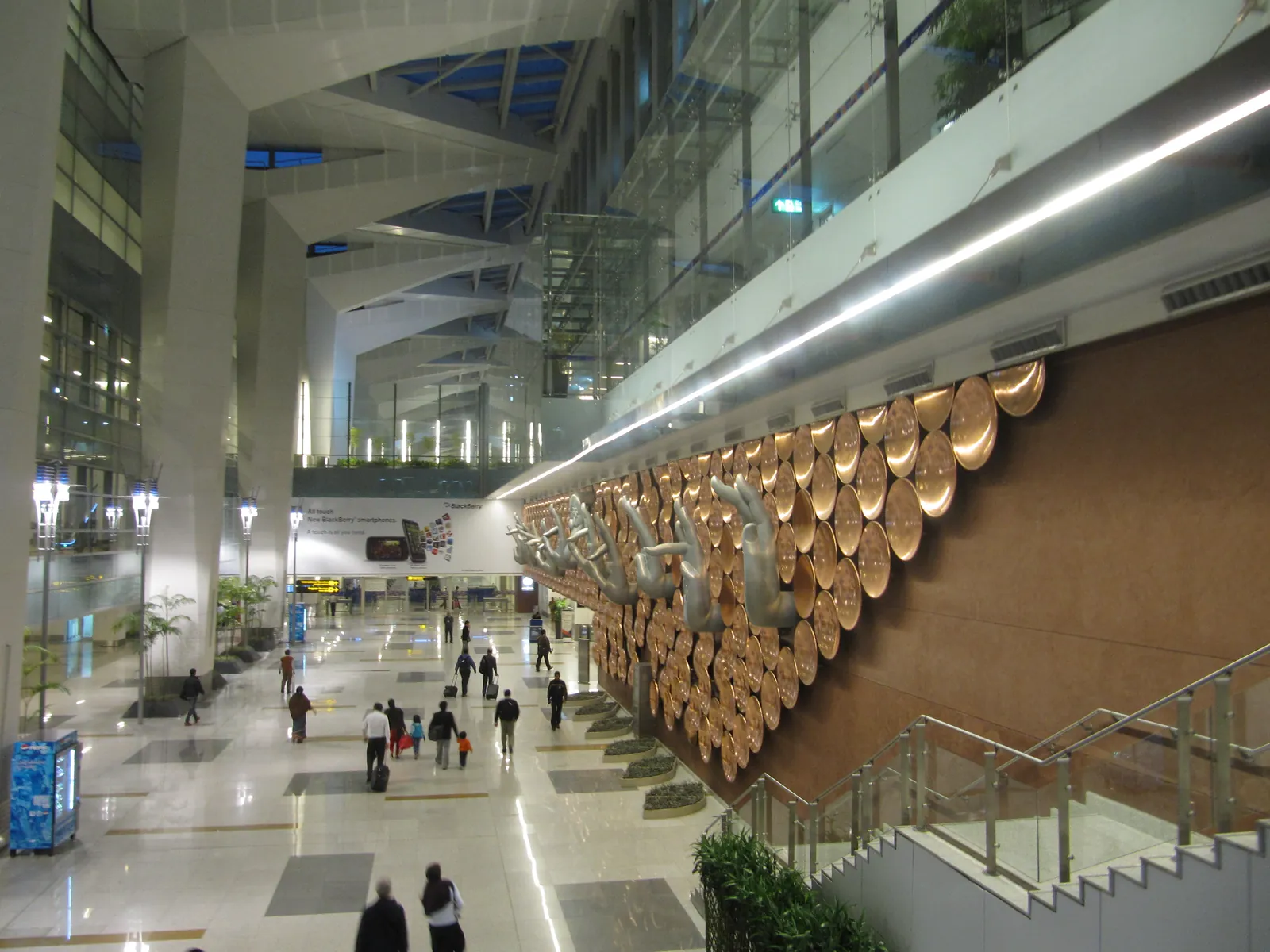
Delhi airport, Terminal 3. Location photograph, not the Adverro installation. Photo: PDXDUS, 2012, Wikimedia Commons, CC0.
Screens
100
Terminals
3
External media players
0
Live since
July 2026
The story in brief
The challenge
Delhi Airport is India’s busiest airport, with passengers moving through three terminals around the clock. Running advertising and passenger information at this scale required:
Operating screens across three terminals as one network
Keeping content accurate and consistent
Supporting non-aeronautical revenue
Reliability in a high-traffic environment
The solution
GMR selected Adverro to run the network as a single, cloud-based platform covering all three terminals. The solution includes:
SoC-native playback on Samsung and Android displays, with no external media players
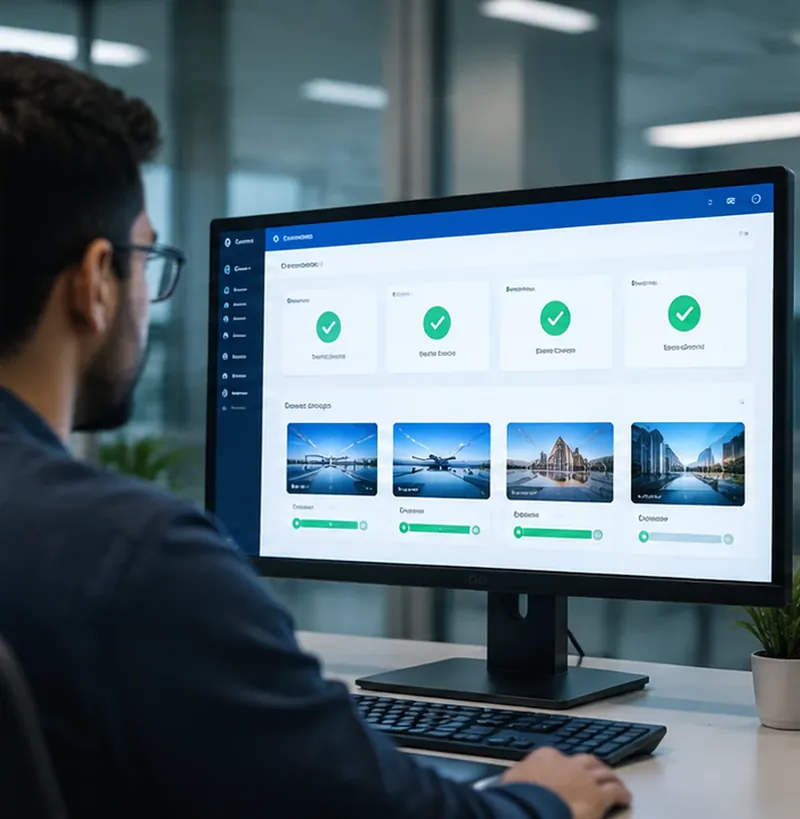
A single operator dashboard for Terminals 1, 2 and 3
Centralised scheduling and remote monitoring
Cloud-based deployment that scales with the airport
The results
100 displays live across Terminals 1, 2 and 3
Centralised management from one dashboard
Reliable performance since July 2026
A scalable, cost-efficient solution for a growing airport
The customer
A concession estate, not a corporate network
GMR Airports operates a build-own-operate-transfer (BOOT) concession at Delhi’s Indira Gandhi International Airport, running standee displays across three terminals. Under a BOOT concession the concessionaire funds, installs and operates the screen network for the length of the term, then hands it over to the airport at the end. The estate carries a mix of advertising inventory and airport information, positioned at boarding gates, arrival belts, immigration halls and retail concessions.
A concession estate has a different shape to a corporate screen network. The operator does not own the building, the screens sit in areas controlled by different airport teams, and the commercial value of the network depends on being able to show an advertiser what actually played and where.
The challenge
Three terminals behave like three networks
Delhi Airport is India’s busiest airport, with passengers moving through three terminals around the clock. An estate of this size spread across three terminals is operationally awkward. Screens sit in zones controlled by different teams, faults get reported by whoever happens to walk past, and advertisers want evidence their content ran. Without one view, the operator is managing three networks that happen to share a customer.
The failure is also public. A dark screen in a departures concourse is seen by thousands of people an hour, including the airport operator and the advertiser paying for the slot. The operations lead usually finds out because somebody else tells them.
What they needed
How the platform was chosen
Screens in three separate terminals run as one network, not three
Accurate, consistent content at every location, at all times
Advertising scheduled centrally to support non-aeronautical revenue, with evidence of what played
Protection to the standard expected of critical airport infrastructure
Fewer site visits into busy and restricted areas of the terminals
A predictable cost of ownership, because under BOOT the concessionaire carries it for the full term
The solution
The player runs on the panel, not behind it
GMR selected Adverro to run the network as a single, cloud-based platform covering all three terminals. Operators now plan, publish and monitor content for every screen from one place.
Single operator dashboard
Content, schedules and display status for Terminals 1, 2 and 3 in one view.
Centralised scheduling
Advertising and passenger information planned and published once, then delivered to the right screens at the right time.
Remote monitoring and management
Issues are identified and handled centrally, reducing the need for site visits inside the terminals.
Cloud-based deployment
Rapid roll-out across three terminals without building dedicated on-site server infrastructure.
Security by design
Built on the principles of confidentiality, integrity and availability, so content stays protected, tamper-proof and on screen.
On the panel itself
The estate runs on a mix of Samsung Tizen 6.0 and above and Android 12 and above panels. On both, Adverro installs as an application on the display’s own chip: a .wgt package on Tizen, installed from Adverro’s package server, and an .apk on the Android units.
That is the part with an operational consequence rather than a marketing one. There is no external media player at any of the screens, so there is no second device per position to mount behind a standee, power, patch, or replace when it fails. On an estate of this size that removes a hundred devices from the installation, and a hundred things that can fail in a public concourse.
The operator dashboard was customised around how the concession actually works rather than around how the software is structured. Screens are named by terminal and physical position, following the operator’s own convention down to individual standee numbers at named retail outlets and gates. Utilisation is reported per terminal, and content performance is measured per asset. A duty manager describing a fault says the same words the dashboard uses.
The deployment
What running it actually involves.
Grouping, not screens
Devices are grouped by terminal and zone, so a schedule change applies to a whole terminal at once, rather than screen by screen. Access can be scoped the same way, which matters when different teams control different areas of the building.
Offline playback
Playback runs from a local cache on each panel. A network fault at one gate does not produce a blank board, and the device resynchronises on its own when the connection returns. In a public terminal this is the difference between an incident and a non-event.
A daily restart
Screens have run continuously for several weeks in testing without stability issues, and we still schedule a restart once per day per screen. It keeps the runtime environment clean and reduces long-run risk on an estate nobody is standing next to. This is operating practice, not a workaround.
The results
What this deployment shows.
100 displays live across Terminals 1, 2 and 3
One network, one dashboard, replacing terminal-by-terminal management
In continuous operation since July 2026, supporting both passenger communication and advertising revenue
The operator now sees the whole estate in one place: which screens are live, which terminal each sits in, how long any has been offline, and what is playing. Fault response starts from the dashboard rather than from a phone call.
Ready to scale
New screens, zones and content types are added to the same platform and the same dashboard, grouped and scheduled the way the existing estate already is.
The bottom line
One platform now runs every advertising and passenger information screen across Delhi Airport’s three terminals. For a BOOT concession, where the operator carries the cost of the network for the full term, that means simpler operations, centralised control of advertising inventory and a cost base that stays predictable as the network grows.
The figures in this write-up are counts: screens, terminals and the go-live date. Percentage improvements in site visits, detection time or fill rate are not reported, because no baseline was recorded before go-live and a figure reconstructed afterwards would not survive a procurement review.
Why airports choose Adverro
Built for critical, high-footfall estates.
SoC-native
Adverro runs directly on the System-on-Chip built into commercial displays, removing the need for external media players.
Lower total cost of ownership
Fewer devices to buy, power, install and maintain, with costs that stay predictable as the network grows.
Faster return on investment
Centralised advertising scheduling turns passenger dwell time into non-aeronautical revenue.
Flexible deployment
Cloud, on-premise, private or hybrid hosting to match each airport’s infrastructure and regulatory requirements.
Secure by design
An architecture built on confidentiality, integrity and availability, suited to critical infrastructure environments.
About Adverro
An SoC-native digital signage platform from Veratas Technology Pvt. Ltd., Noida, India, helping enterprises in aviation, retail, banking, hospitality, healthcare and the public sector manage screen networks of any size from a single, secure platform.
A trusted technology partner for India’s aviation infrastructure
Adverro and GMR, delivering a smarter, more connected digital experience at one of India’s busiest airports.
Planning a digital signage network for your airport?
Speak to the Adverro team at Veratas Technology to arrange a demonstration: multi-terminal deployment, operator dashboards and proof-of-play reporting for advertisers.