
Stores and menu boards
Menu boards, promotions and campaign measurement.
Retail and quick service estates change content constantly, across hundreds of sites, often with pricing that must match the point of sale exactly. Getting it wrong is a compliance problem, not just a marketing one.
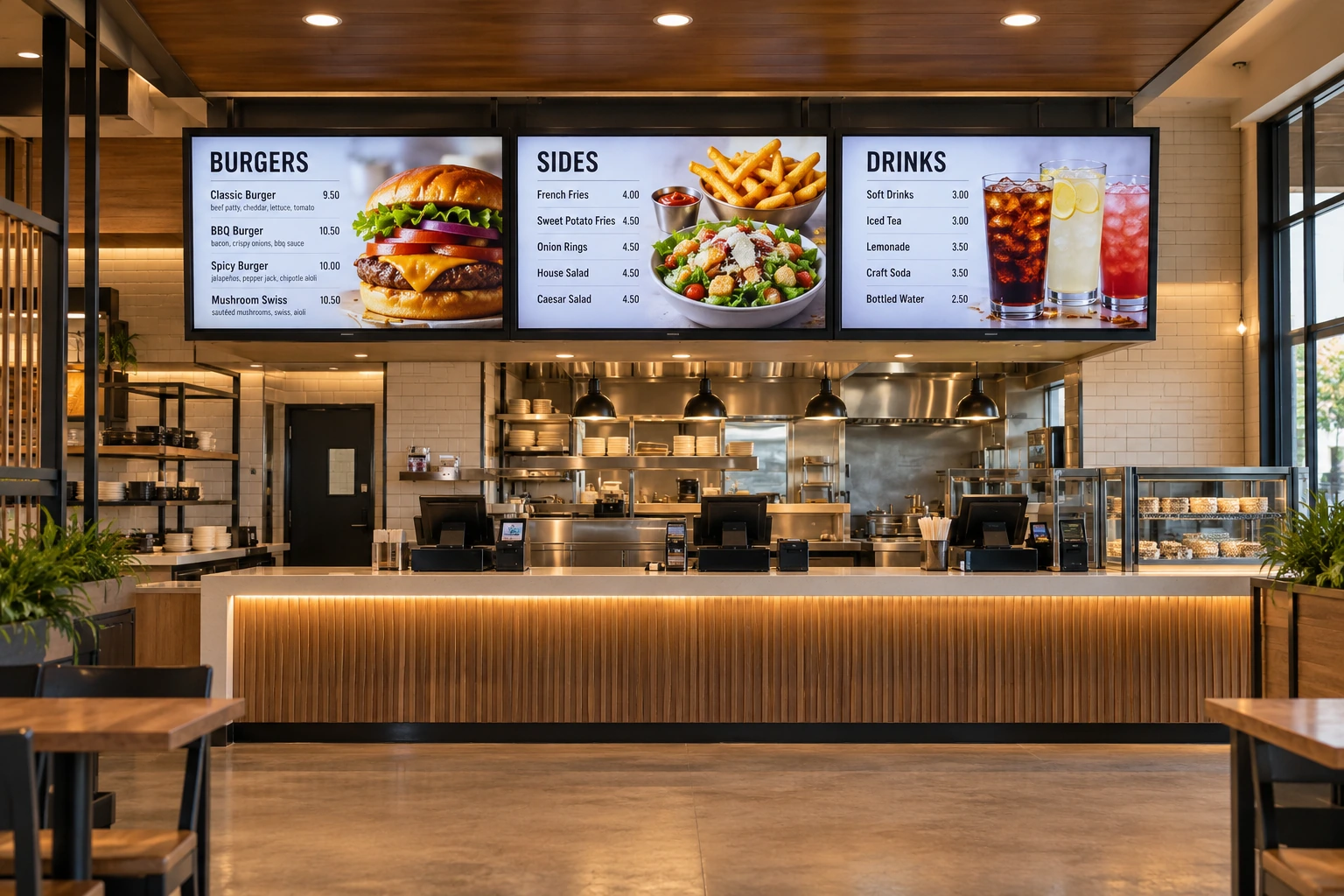
A typical retail and qsr layout.
Schematic of a store and quick-service restaurant showing menu boards at the counter, drive-through and window screens and shop-floor promotion screens
- Counter3 menu boards
- Drive-through2 portrait screens
- Shop floor3 portrait screens
- Window2 portrait screens
- Queue1 landscape screen
Each zone is a tag in the platform, so a playlist can target one zone, one site or the whole estate, and every screen reports its status and proof of play against that zone.
What Adverro does in a store or restaurant.
What it covers
- Menu boards driven from your own pricing source through a web view or API variables
- Daypart-scheduled promotions driven from your own inventory source
- Campaign performance measured inside the platform
- Approval workflows so head office controls what ships
Why this sector is different
Price accuracy
Pricing is pulled from the system that already holds it rather than retyped, using a web view or API variables bound into the template.
Dayparting
Breakfast, lunch and evening menus switching on schedule without staff involvement.
Campaign proof
Play traces showing what actually played on each screen, not what was scheduled.
Estate consistency
Approval chains that stop a single outlet publishing off-brand content.