
Railway platforms, metro stations, concourses and ticketing
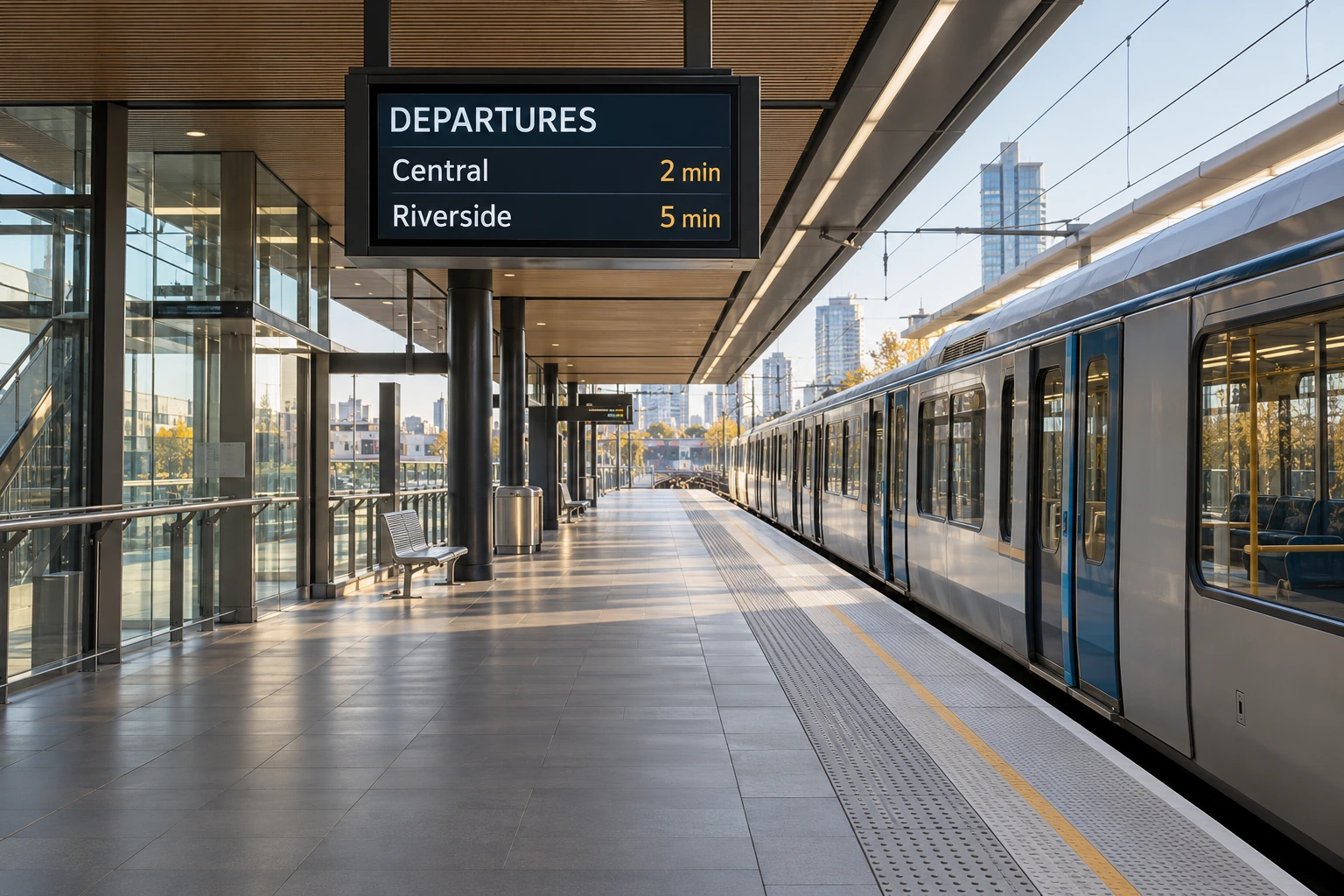
Passenger information for rail, metro and bus terminals.
Interchange stations, platforms and bus bays combine scale with unforgiving conditions: patchy connectivity, LED and large-format information boards alongside LCD screens, and timetables that must be right at the moment a passenger looks up.
A typical transport layout.
Schematic of an interchange station showing LED boards on the concourse and at the interchange, screens on the platforms, at ticketing and in waiting areas
- Concourse2 LED information boards
- Platforms4 landscape screens
- Ticketing2 portrait screens
- Waiting areas2 landscape screens
- Interchange2 LED information boards
Each zone is a tag in the platform, so a playlist can target one zone, one site or the whole estate, and every screen reports its status and proof of play against that zone.
What Adverro does in a rail, metro or bus network.
What it covers
- Live timetables and passenger information on platforms and concourses
- LED and large-format information boards as well as LCD screens
- Bus terminals: departures, bay allocations and waiting areas
- Service notices targeted to a line, a station or a platform
- Offline failover as standard equipment, not an upgrade
- Centralised control across stations, terminals and depots
Why this sector is different
Unreliable connectivity
Platform displays keep playing from cache and resync automatically when the link returns.
Accuracy matters
Playback traces show which device last played what, so a display running an old schedule is visible before passengers notice.
The right screens
Tags target a playlist at a line, a station or a platform, so a notice reaches exactly the screens it concerns.
Estate scale
Tags and tag rules so a change applies to a line, not a device at a time.